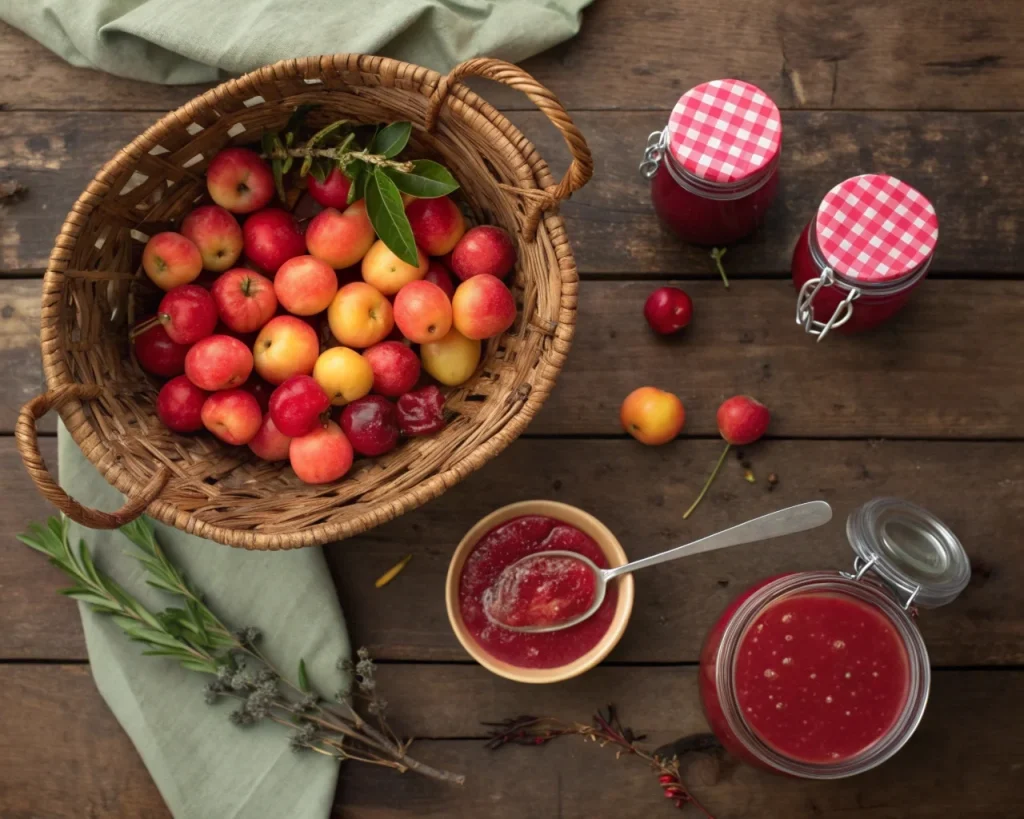
There’s a special kind of magic in transforming a foraged, often-overlooked treasure into something truly spectacular. If you’ve ever seen a crab apple tree heavy with its tiny, tart fruits and wondered, “What on earth can I do with those?”—you’re in for a delightful surprise. Welcome to the sweet, satisfying world of homemade preserves, starting with the most beautiful jewel-toned condiment of all: a classic crab apple jelly recipe.
This stunning jelly, with its vibrant pink-gold hue and perfectly balanced sweet-tart flavor, is the secret weapon of savvy cooks and gardeners. It’s more than just a spread for toast; it’s a glaze for roasted meats, a filling for thumbprint cookies, and a spoonful of summer captured in a jar. Mastering this crab apple jelly recipe connects you to generations of home preservers and turns a humble, sour fruit into a pantry superstar. Let’s roll up our sleeves and create something beautiful.
Why This Crab Apple Jelly Recipe is a Timeless Kitchen Skill
Before we start simmering, let’s talk about why this particular preserve is so worth the effort. A perfect crab apple jelly recipe offers rewards that go far beyond the finished jar.
- Zero-Waste Cooking at Its Finest: It utilizes a fruit that often goes to waste, making it a sustainable and economical choice.
- Natural Pectin Powerhouse: Crab apples are incredibly high in natural pectin, meaning your jelly will set firmly without needing to add commercial pectin, resulting in a purer, cleaner flavor.
- Unmatched Flavor and Color: The jelly has a complex, tangy, apple-forward taste and a color that ranges from soft rose to deep amber—all from the fruit itself.
- The Pride of Creation: There’s an immense sense of accomplishment in hearing that satisfying pop of a sealing jar and labeling your own creation.
This crab apple jelly recipe is your gateway to the fulfilling craft of home canning. It’s forgiving, reliable, and yields a product more delicious than anything you can buy.

Gathering Your Ingredients & Equipment: Keeping it Simple
The beauty of a true crab apple jelly recipe is its stunning simplicity. The fruit does most of the work.
The Ingredients:
- 4 pounds fresh crab apples: Don’t worry about bruises; just trim away major bad spots. The variety affects color—some yield a clear gold, others a gorgeous pink.
- Water: Enough to barely cover the fruit in the pot (about 6-8 cups).
- Sugar: You’ll use about 3/4 to 1 cup of granulated sugar for every 1 cup of juice you extract. We’ll measure precisely after juicing.
- Optional: 1-2 tablespoons fresh lemon juice: To brighten flavor and ensure acidity, especially if your apples are very sweet.
The Essential Equipment:
- Large, heavy-bottomed stockpot (8-quart or larger)
- Jelly bag or a colander lined with 4 layers of damp cheesecloth
- Large bowl or pot for collecting juice
- Canning funnel, ladle, and jar lifter
- Clean kitchen towels
- For Canning: 6-8 half-pint canning jars with new lids and bands, and a large water bath canner or a very deep pot with a rack.
Your Step-by-Step Guide to the Perfect Crab Apple Jelly Recipe
This process happens in two clear stages: first extracting the jewel-colored juice, then transforming it into jelly. Follow these steps for flawless results.
Stage 1: Extracting the Beautiful Juice
This stage is about patience and letting the fruit release its magic.
Step 1: Wash and Prep the Fruit
Rinse the crab apples thoroughly under cool water. No need to peel or core! Simply remove stems, blossom ends, and any major blemishes. Cutting them in half or quarters is helpful but not strictly necessary. The seeds and cores contribute to the pectin.
Step 2: Simmer to Soften
Place the prepped crab apples in your large stockpot. Add just enough water to barely cover the fruit. Bring to a boil over high heat, then reduce to a simmer. Cook, partially covered, for 20-30 minutes, stirring occasionally, until the fruit is completely soft and mushy. You’ve just created what’s called a “fruit mash.”
Step 3: The Drip Method (The Key to Clear Jelly)
This is the most important step for a crystal-clear crab apple jelly recipe. Set up your strainer: suspend your jelly bag (or colander with cheesecloth) over a large bowl or pot. Carefully pour the hot fruit mash into the bag. Do not squeeze or press the bag. Let the juice drip through, undisturbed, for at least 4-6 hours, or preferably overnight. Squeezing will force pulp through and cloud your beautiful jelly.
Stage 2: Transforming Juice into Jelly
Now for the alchemy! For this stage, ensure your jars are washed and sterilized, and your canner is ready.
Step 4: Measure and Calculate
Pour the extracted juice into a large measuring cup. You’ll need to know exactly how much you have. For this crab apple jelly recipe, the standard ratio is: For every 1 cup of juice, use 3/4 to 1 cup of sugar. Write this down.
Step 5: The Boil and Set Test
Pour the juice and the corresponding amount of sugar into your clean, heavy-bottomed pot. Add lemon juice if using. Stir over medium heat until the sugar dissolves completely. Then, increase the heat to medium-high and bring the mixture to a full, rolling boil that cannot be stirred down. Boil hard, stirring occasionally to prevent scorching.
The Set Test (The Magic Moment): After about 10-15 minutes of boiling, start testing for the gel set. The easiest method is the plate test: Place a small plate in the freezer. After a few minutes of boiling, drop a teaspoon of the hot jelly onto the frozen plate. Let it sit for 30 seconds, then push it with your finger. If it wrinkles and the surface tension holds, it’s ready (this is the “sheeting” or “wrinkle” test). If it’s still runny, boil for another 2-3 minutes and test again.
Step 6: Jar and Process
Once the jelly has reached the set point, remove it from the heat and skim off any foam with a spoon. Using your ladle and funnel, immediately pour the hot jelly into your sterilized hot jars, leaving 1/4-inch headspace. Wipe the rims with a clean, damp cloth to ensure a perfect seal. Place a lid on each jar and screw on the band until it’s fingertip-tight.
Process the jars in your prepared boiling water bath canner for 10 minutes (adjusting for altitude if necessary). Remove and let them cool, undisturbed, for 12-24 hours. You’ll be rewarded with the magical ping of seals.
Pro Tips for Jelly-Making Success
- Don’t Rush the Drip: Cloudy jelly is almost always caused by squeezing the bag. Patience is the key to a sparkling, professional-looking crab apple jelly recipe.
- The Power of the Plate Test: Trust this old-fashioned method over timers. Pectin levels vary, so the set time does too.
- A Spotless Rim is Everything: Any bit of jelly on the jar rim can prevent a seal.
- Embrace the Foam: Skimming foam before jarring gives a clearer jelly, but you can also stir in 1/2 teaspoon of butter at the end of boiling to reduce foam—it won’t affect flavor or safety.
- Label Your Masterpiece: When cool, label your jars with the name and date. A perfect crab apple jelly recipe gift is one people will remember.

Creative Variations on Your Classic Crab Apple Jelly
Once you’ve mastered the basic crab apple jelly recipe, the flavor world is your oyster.
- Herb-Infused: Add a few sprigs of fresh rosemary, thyme, or sage to the juice during the final boil. Remove before jarring.
- Spiced Crab Apple Jelly: Tie 2 cinnamon sticks, 1 teaspoon whole cloves, and 6 allspice berries in cheesecloth. Simmer this spice bag with the juice and sugar.
- Wine Jelly: Substitute up to half of the crab apple juice with a dry red or white wine for a sophisticated grown-up glaze.
How to Use Your Homemade Crab Apple Jelly
Think beyond the breakfast table! This jelly is a versatile kitchen star:
- The Classic: Spread on biscuits, scones, toast, or peanut butter sandwiches.
- The Glaze: Brush on pork chops, chicken, or salmon during the last 10 minutes of roasting.
- The Sauce: Thin with a little vinegar or broth for a quick pan sauce.
- The Cheese Pairing: Serve alongside a sharp cheddar, brie, or goat cheese on a charcuterie board.
- The Baker’s Friend: Use as a filling for cakes, pastries, or thumbprint cookies.
Frequently Asked Questions (FAQs)
Q1: Do I have to can it? How else can I store it?
A: Water bath canning is for long-term, shelf-stable storage. If you prefer, you can skip the canning step: pour the hot jelly into clean jars, let cool, cover, and refrigerate for up to 3 months, or freeze for up to a year.
Q2: My jelly didn’t set! What happened and can I fix it?
A: This is common for beginners. The likely culprits are not boiling hard/long enough, inaccurate sugar measurement, or low-pectin fruit. Don’t despair! You have “crab apple syrup,” which is delicious on pancakes. To re-do it, pour all the jelly back into the pot, bring to a boil, and try the set test again. You can also add a little commercial liquid pectin according to its package directions.
Q3: Can I use green/unripe crab apples?
A: Yes! In fact, slightly under-ripe crab apples are even higher in pectin, which can help ensure a good set. This crab apple jelly recipe works beautifully with fruit at any stage of ripeness.
Q4: Is it safe to not peel or core the apples?
A: Absolutely. For this crab apple jelly recipe, you want the pectin from the cores and the flavor from the skins. The straining process removes all solids, leaving you with pure, clear juice.
Q5: How long do canned jars of crab apple jelly last?
A: Properly canned and sealed jars are safe for consumption for 18-24 months when stored in a cool, dark place. For the best quality and flavor, aim to use them within a year. Always check that the lid is still vacuum-sealed before use.
Q6: Can I double this recipe?
A: You can, but do so with caution. It’s best to work in batches no larger than 6 cups of juice at a time. Too large a volume can prevent an even, rolling boil and make it difficult to achieve a proper gel.
Q7: What’s the white stuff floating on top of my jarred jelly?
A: This is usually just tiny air bubbles that rose to the top during storage and is harmless. If you see any unusual fuzz, colors, or smell fermentation, discard the jar.
Conclusion: The Rewarding Craft of Capture and Keep
Completing this crab apple jelly recipe is an act of connection—to the seasons, to tradition, and to the simple, profound pleasure of creating something lasting and beautiful from nature’s bounty. That row of glowing jars in your pantry is more than food; it’s bottled sunshine, a trophy of patience, and a promise of future meals shared.
You now hold the knowledge to transform a knobby, sour fruit into a sparkling, versatile delicacy. So the next time you pass a laden crab apple tree, see it not as an ornamental, but as an invitation. An invitation to slow down, to practice a timeless skill, and to taste the unique flavor of your own landscape, preserved with your own hands. Grab a basket, follow this crab apple jelly recipe, and discover the deep satisfaction found in a single, perfect jar.