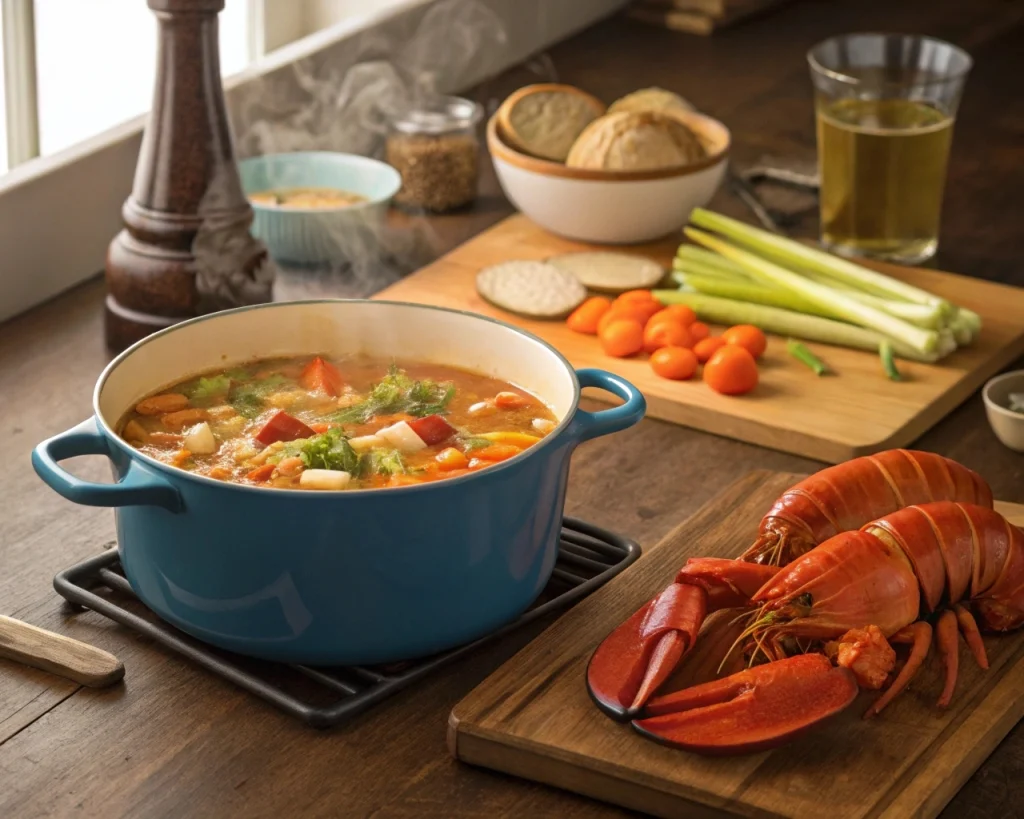
Let’s be honest: after the joyful, messy feast of cracking into whole lobsters, you’re often left staring at a pile of empty shells. It might feel like the party’s over, destined for the trash. But I’m here to tell you, with absolute certainty, that you’re looking at the secret start of your next incredible meal. Those shells are not garbage; they are the foundation for one of the most luxurious, flavor-packed ingredients in any kitchen: a rich, deeply flavorful homemade lobster stock recipe.
Think of this as culinary alchemy. You’re transforming what seems like waste into a complex, amber-hued elixir that forms the soul of elegant soups, breathtaking sauces, and decadent risottos. A great lobster stock recipe captures the very essence of the sea—sweet, briny, and intensely savory. It’s the difference between a good seafood bisque and a transcendent one. This guide will walk you through every step, demystifying the process and showing you how a humble pot of simmering shells can become your most prized ingredient in the freezer.
Why Your Kitchen Needs This Lobster Stock Recipe
You can buy fish stock or seafood broth at the store, right? Sure. But making your own lobster stock recipe offers benefits that a cardboard carton simply cannot match.
- Depth of Flavor: Homemade stock extracts every last bit of flavor from the shells, including the rich tomalley (the green liver) and roe (if present), creating a taste that is multi-dimensional and robust.
- Zero Waste Cooking: This is the ultimate sustainable kitchen practice. You’ve paid for the whole lobster; this ensures you use the whole lobster, honoring the ingredient and getting maximum value.
- Control: You decide what goes in. No unwanted preservatives, excess salt, or artificial flavors. Just pure, clean shellfish essence.
- Culinary Credibility: Using a homemade lobster stock recipe is the hallmark of a cook who understands building flavor from the ground up. It’s the secret weapon that makes your dishes taste professional.
The Flavor Foundation: Understanding the Ingredients
A classic lobster stock recipe follows the same principle as a great chicken or beef stock: you combine your core ingredient (shells) with aromatic vegetables, herbs, and water, then simmer to extract all the goodness. Here’s what you’ll need:
The Star (The Shells):
- Shells from 2-4 lobsters: This is your primary flavor source. Carcasses, claws, legs, and tails. The more, the better. Freshly picked shells are ideal, but you can also freeze shells after a lobster dinner until you have enough.
The Aromatic Vegetables (Mirepoix):
- 1 large onion, roughly chopped (peel on is fine for color)
- 2 carrots, roughly chopped
- 2-3 celery stalks, roughly chopped
The Flavor Enhancers:
- 2-4 tablespoons tomato paste: This is crucial. It adds depth, a touch of acidity, and a beautiful rich color to your lobster stock recipe.
- 1/4 cup brandy, dry sherry, or white wine (optional but recommended): Deglazing with a splash of alcohol lifts flavorful bits and adds complexity.
- 4-6 cloves garlic, smashed
- 1 tablespoon whole black peppercorns
- 2 bay leaves
- A small bunch of fresh thyme and parsley stems (tied with kitchen twine)
- 1 teaspoon fennel seeds (optional): Complements the seafood flavor beautifully.
The Liquid:
- 8-10 cups cold water: Enough to cover the shells by about an inch.
Your Step-by-Step Guide to the Perfect Lobster Stock Recipe
This process is more about patience than skill. Set aside a lazy afternoon; your reward will be quarts of culinary gold.
Step 1: Prep and Crush Your Shells
Break down the lobster shells into smaller pieces. This is a key step for maximizing surface area and flavor extraction. Use a heavy knife, a meat mallet, or the bottom of a sturdy pot. Don’t be shy—crack the claws and crush the bodies. Place all crushed shells in a large stockpot or Dutch oven.
Step 2: Build a Flavor Base (The Sauté)
In a separate large pot or Dutch oven (at least 8 quarts), heat 2 tablespoons of a neutral oil (like canola) or olive oil over medium heat. Add the chopped onions, carrots, and celery. Sauté for 8-10 minutes, stirring occasionally, until the vegetables have softened and the onions are translucent.
- Pro-Tip: Add the tomato paste at this stage. Push the vegetables to the side, add the paste to the center of the pot, and let it cook for 2-3 minutes, stirring constantly. This “toasts” the paste, mellowing its acidity and caramelizing its sugars, which is essential for a rich lobster stock recipe.

Step 3: Deglaze and Combine
If using brandy, sherry, or wine, pour it into the pot with the vegetables and tomato paste. It will sizzle. Use your spoon to scrape up any browned bits (fond) from the bottom of the pot—this is pure flavor. Let it simmer for 1-2 minutes until the alcohol smell dissipates.
Now, add all your crushed lobster shells to the pot. Stir everything together so the shells are coated in the flavorful vegetable mixture.
Step 4: The Long, Slow Simmer
Add the cold water to the pot. Toss in the garlic, peppercorns, bay leaves, herb bundle, and fennel seeds. Bring the pot to a gentle boil over high heat, then immediately reduce the heat to low. You want the barest simmer—a few small bubbles breaking the surface occasionally.
Partially cover the pot and let it simmer gently for 1 to 1.5 hours. Do not boil vigorously, as this can make the stock cloudy and impart a bitter flavor. Skim off any foam or impurities that rise to the top during the first 20 minutes.
Step 5: Strain and Reduce
After simmering, remove the pot from the heat. Carefully strain the stock through a fine-mesh strainer or a colander lined with cheesecloth into a large clean pot or bowl. Press gently on the solids to extract liquid, but don’t mash them, as this can cloud the stock.
For an Intense, Restaurant-Quality Stock: Return the strained liquid to a clean pot. Bring it to a simmer over medium heat and let it reduce by one-third to one-half. This concentrates the flavor dramatically, making it a powerhouse for sauces. This reduced form is the ultimate goal of a great lobster stock recipe.
Step 6: Cool and Store
Let the finished stock cool to room temperature, then refrigerate. As it chills, any fat will solidify on the surface; you can skim this off and discard it (or use it to sauté vegetables for an incredible flavor boost). Your lobster stock recipe will keep in the fridge for 3-4 days. For long-term storage, pour it into ice cube trays, freezer bags, or airtight containers and freeze for up to 6 months.

What to Make with Your Homemade Lobster Stock
This is where the magic happens. Your lobster stock recipe is the launchpad for culinary greatness.
- Lobster Bisque: The classic, silky-smooth soup.
- Seafood Risotto: Use it as the cooking liquid for an unforgettably rich risotto.
- Pan Sauces: Deglaze a pan after searing scallops or fish with a splash of stock, then finish with butter and herbs.
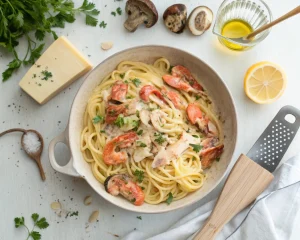
- Lobster Pasta: Reduce the stock with cream and herbs for an incredible pasta sauce.
- Seafood Stews and Chowders: Use it as the base for cioppino or New England-style chowder.
- Cooking Grains: Cook rice or quinoa in it for an incredible side dish.
Frequently Asked Questions (FAQs)
Q1: Can I make lobster stock without fresh lobster shells? Can I use frozen?
A: Absolutely! Frozen shells work perfectly. In fact, saving shells in a freezer bag after each lobster meal is the most practical way to accumulate enough for this lobster stock recipe. Just thaw them slightly before crushing.
Q2: Is it okay to include the lobster tomalley (green stuff) and roe (red stuff)?
A: Yes, and for a more authentic, rich flavor, you should! The tomalley (liver) and roe (eggs) contribute immense depth and a unique, prized flavor to the stock. They are considered delicacies for a reason.
Q3: How long should I simmer the stock? Is longer better?
A: 1 to 1.5 hours is optimal. Simmering longer than 2 hours can start to extract bitter flavors from the shells. A gentle, patient simmer is better than a long, aggressive boil.
Q4: My stock turned out cloudy. What did I do wrong?
A: Cloudiness is usually caused by boiling the stock too vigorously or mashing the solids when straining. It’s purely an aesthetic issue—the flavor is still fantastic! For a clearer stock next time, maintain the gentlest possible simmer and strain carefully without pressing.
Q5: Can I make a quick lobster stock in under an hour?
A: You can simmer for 45 minutes and get a decent broth, but for the full, rounded flavor that defines a proper lobster stock recipe, the full hour is recommended. The reduction step after straining also intensifies flavor quickly.
Q6: Can I add shrimp shells or crab shells to this recipe?
A: Definitely! A mix of shellfish shells creates a wonderful, complex seafood stock. The method remains identical. This is a great way to use shells from a seafood boil.
Q7: Do I need to roast the shells first?
A: Roasting is not traditional for a classic lobster stock recipe, but it’s an excellent variation. Roasting the crushed shells in a 400°F oven for 15-20 minutes before adding them to the pot adds a deeper, toasted, and more robust flavor—perfect for a bisque.
Conclusion: The Beginning, Not the End
Mastering this lobster stock recipe is a rite of passage for any home cook passionate about flavor. It reframes the entire lobster experience, transforming the final act from cleanup into creation. That pot of simmering shells is a promise—a promise of future meals that will carry the whisper of the sea and the satisfaction of true, resourceful cooking.
You now hold the knowledge to create an ingredient that elevates everything it touches from simple to sublime. So, the next time you enjoy a lobster, see the shells not as an end, but as the beautiful, flavorful beginning of your next kitchen adventure. Save them, simmer them, and savor the incredible depth of your own homemade lobster stock recipe. Your freezer (and your future dinners) will thank you.